In World of Warcraft, your raid success isn’t just about battling; it’s about the work you put in beforehand. Nailing the right raid composition, understanding boss mechanics, and optimizing your gear are essential. You’ll want to practice player positioning and guarantee DPS roles are balanced for those intense encounters. Communication tools like Discord are lifesavers for coordination. Stock up on potions and manage buffs wisely to gain a competitive edge. Finally, post-raid reviews help you identify weak spots and refine strategies. Dive deeper and you’ll uncover the secrets to mastering these epic battles.
Key Takeaways
- Class role assignment and synergy ensure balanced DPS and healing distribution, maximizing team effectiveness during raids.
- Understanding and anticipating boss mechanics reduces unnecessary damage, improves survival rates, and ensures smoother encounters.
- Gear optimization and consumables preparation enhance performance, boosting survivability and effectiveness of DPS, tanks, and healers.
- Effective communication and coordination tools streamline raid strategies, ensuring quick and clear dissemination of crucial information.
- Post-raid reviews and feedback loops help identify areas of improvement, refine strategies, and foster continuous performance enhancement.
Raid Composition
A solid raid composition is the backbone of a successful World of Warcraft raid. Guaranteeing class synergy is essential—you want classes that complement each other’s strengths and weaknesses. Flexibility in tactics is imperative, as it allows quick adaptation to unforeseen challenges. Strong damage distribution guarantees that no DPS checks become a bottleneck, while healing balance keeps everyone alive during intense encounters.
Crowd control can’t be overlooked. Utilizing classes with effective crowd control abilities can mean the difference between smooth changes and chaotic wipes. Cooldown management is another critical aspect; having players who know when to use their powerful abilities guarantees maximum efficiency during pivotal moments.
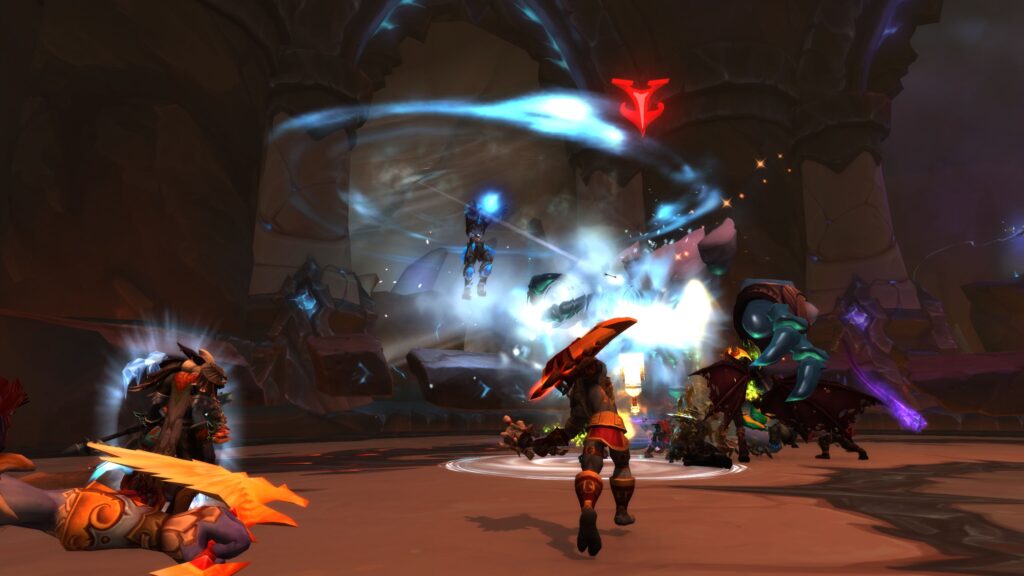
Don’t forget utility roles. Classes that bring buffs, debuffs, or other unique utilities contribute substantially to overall raid performance. Composition variety should be a priority, offering multiple ways to approach a given problem.
Successful tank coordination is indispensable. Tanks need to communicate and position themselves strategically to mitigate damage and maintain threat. When these elements come together—class synergy, flexibility, damage distribution, healing, crowd control, cooldowns, utility, variety, and tank coordination—you’ve got the recipe for a raid composition that can tackle any challenge Azeroth throws your way.
Understanding Boss Mechanics
Maneuvering the complexities of World of Warcraft raids requires a deep understanding of boss mechanics. Recognizing boss abilities and knowing when and how they’ll be deployed is essential. You’ll encounter damage phases that throttle your group’s health, demanding swift debuff management and impeccable reaction skills.
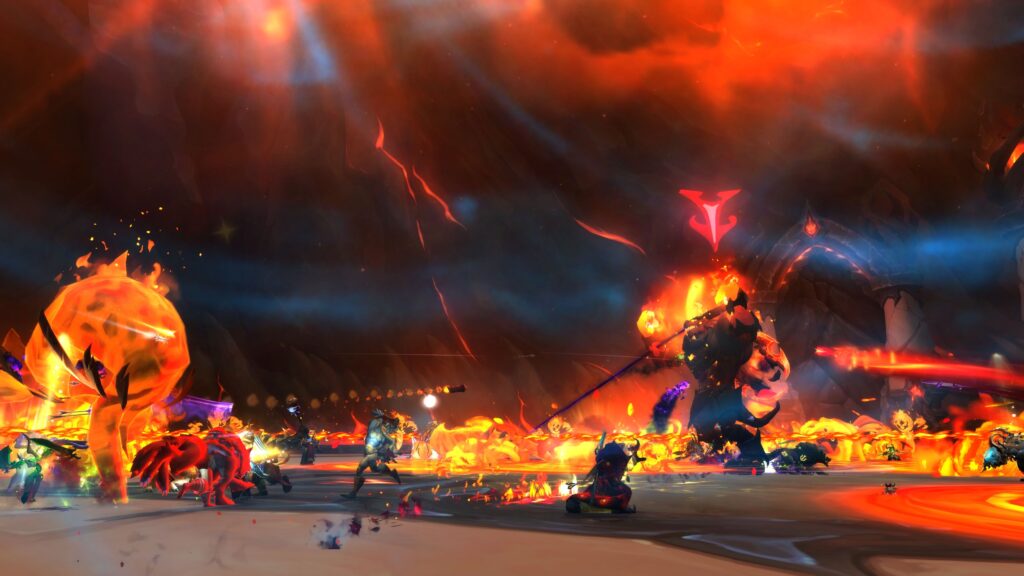
Key Steps to Mastering Boss Mechanics:
- Analyze Attack Patterns: Study the timing mechanics and sequence of phases. Recognize visual cues for impending attacks and phase shifts.
- Practice Player Positioning: Your survival depends on effective counter strategies against environment hazards. Proper positioning can mitigate the impact considerably.
- Coordinate Team Efforts: Successful raids hinge on team coordination, especially during execution timing of vital abilities and focus targets.
You’ll need to anticipate phase shifts and adjust tactics accordingly. Every boss has a learning curve, and patience in understanding these mechanics converts to smoother raids. Pay attention to visual cues to preempt attacks or environmental changes. Perfecting your reaction skills guarantees minimal disruption during intense damage phases.
In essence, mastering boss mechanics involves an intricate dance of predicting and responding—always be one step ahead with counter strategies and stay in sync with your team’s movements. Only then can you achieve raid success.
Gear Optimization
Gear optimization is essential to your success in raids, ensuring that you squeeze every bit of performance from your character. Start by selecting the best enchantments aligned with your class, followed by a careful analysis of which stats to prioritize for maximizing your damage or healing potential. Don’t forget to map out your upgrade paths to steadily enhance your gear, making each step towards endgame content that much smoother.
Best Enchantments Selection
When it comes to gearing up for World of Warcraft raids, selecting the best enchantments can make a world of difference in your performance and survivability. Mastering enchantment selection means understanding enchantment priorities and recognizing the synergies between different gear pieces. Your first step is to gather the right crafting materials and identify reliable enchantment sources. Here’s how you can optimize your gear:
- Customization Options: Tailor your enchantments based on your role. Healers might prioritize mana regeneration, while tanks could focus on damage mitigation. DPS players often look for critical strike or haste enchantments. This customization comes with a significant competitive advantage, allowing you to min-max your character effectively.
- Patch Updates and Meta Shifts: Stay updated with the latest patch notes. Enchantments that were once top-tier can shift with meta changes, so always be ready to adapt. Opting for the latest enchantments guarantees you’re not falling behind the curve.
- Enchantment Synergies: Focus on creating harmonious gear setups. For example, combining an enchantment that boosts your primary stat with another that enhances secondary stats can yield better overall performance.
Stat Prioritization Strategy
Understanding stat prioritization is essential to optimizing your gear in World of Warcraft raids. As you investigate the complex balancing act that is stat prioritization, you’ll find it dramatically influences your raid performance, whether you’re maximizing dps, enhancing healing, or guaranteeing tank durability.
For DPS, boosting your primary stat, such as Strength, Agility, or Intellect, followed by secondary stats like Critical Strike or Haste, can turn you into a damage-dealing powerhouse. You’ll want to target gear that enhances these stats, keeping in mind specific boss mechanics that might require you to tweak your setup.
Healers should emphasize stats like Intellect, which boosts healing power, and secondary stats like Mastery or Versatility that can increase your healing throughput or reduce damage taken. Your choice in these stats can be the fine line between keeping the raid alive and a disastrous wipe.
Tanks, however, need to focus on durability. Prioritize Stamina and secondary stats like Versatility or Mastery. These choices guarantee you can withstand catastrophic hits while providing the necessary threat to keep enemies off your squishier allies.
Upgrade Paths Analysis
Steering through the labyrinth of gear optimization is vital for ascending the ranks in World of Warcraft raids. It’s about more than just collecting high-stat items; it requires strategic planning and timing. Gear progression systems are your roadmap, guiding you through artifact enhancements and seasonal upgrades to guarantee your progress syncs with the evolving challenges.
Consider these steps to streamline your gear optimization:
- Gear Rarity Evaluation: Prioritize acquiring the highest tier items. Legendary and epic pieces greatly enhance your performance due to their superior stats and unique bonuses.
- Upgrade Timing Strategies: Synchronize your upgrades with major patches and expansion releases. This guarantees you’re not falling behind as new content raises the stat cap.
- Class Synergy Exploration: Tailor your gear to complement your class and spec. This isn’t just about personal power but enhancing overall raid synergy.
Understanding loot distribution methods within your guild also guarantees fair access to critical upgrades. Don’t forget enhancement transmog options to visually reflect your tier set benefits—after all, appearance can fuel your confidence. Master this maze, and you’ll see remarkable player skill improvement, climbing the raid leaderboard with each strategic choice.
Consumables and Buffs
Diving into the world of consumables and buffs is vital for boosting your performance in World of Warcraft raids. Your pre-raid planning should always include meticulous potion preparation. Knowing which potions to use can make or break high-stakes encounters. Effective buff timing is another cornerstone; coordinate with your team to refine those significant moments. Consumable management guarantees you have the right items at the right time, avoiding wasted resources and missed opportunities.
Resource allocation is more than just having enough flasks and potions—it’s about how you can empower your team as well. You’ll want to focus on strategic consumption, making sure everyone uses their consumables at the ideal times. This not only maximizes individual performance but also enhances overall team synergy, making the raid smoother.
Buff stacking is another vital aspect. Be mindful of how different buffs interact to maximize your effectiveness while remaining aware of any potential drawbacks. Understanding these interactions allows for synergy refinement, where the combined effects amplify your team’s capabilities. By combining all these elements, you’ll guarantee that your team not just survives but thrives in challenging raid environments.
Class Role Assignment
When assigning class roles for a raid, you’ll want to focus on ideal role allocation to guarantee each player’s skills are maximized. Balancing team dynamics is essential; a well-rounded mix of tanks, healers, and DPS can make or break your raid’s success. Understanding role mechanics deeply will enable you to position everyone perfectly, harnessing their strengths for the toughest battles.
Optimal Role Allocation
In any World of Warcraft raid, effectively assigning roles based on class strengths is essential for success. You’ve got to harness role synergy and skill alignment to optimize your team. Making certain everyone knows their task is key. For instance, your tanks should handle primary tank responsibilities, like managing threat and positioning bosses. Skillful delegation guarantees your team is both effective and efficient.
Think of it this way:
- DPS Balance: Distribute your damage dealers to capitalize on class versatility. A mix of melee and ranged DPS can adapt to different encounter roles.
- Healer Coordination: Organize healers around team synergy. Assign specific healers to main tanks, while others focus on raid-wide damage.
- Tank Responsibilities: Your tanks should reflect player strengths, making sure they’re comfortable with their tasks, whether it’s main tanking or off-tanking.
Balancing Team Dynamics
After securing ideal role allocation, the next step is balancing team dynamics through strategic class role assignment. To foster group synergy, consider each member’s personality dynamics and how they influence the team’s makeup. A strong leader with adaptable leadership styles can mitigate potential conflicts by maintaining high team morale and swiftly executing conflict resolution strategies.
Role flexibility is vital; it guarantees that players can switch roles if necessary, enhancing adaptability training. Trust building is another key element. Trust establishes a foundation where feedback loops become effective, as players feel secure sharing constructive criticism. This openness paves the way for continuous improvement and reinforces commitment levels.
Assessing each player’s commitment level is essential to maintaining a cohesive unit. Players who consistently show up and perform their roles well boost overall team morale. Keep an eye on how personalities mesh, promoting positive interactions and curbing any friction early on.
Utilizing targeted feedback loops allows the team to adjust strategies dynamically. With the right balance and a keen eye on both individual capabilities and collective harmony, you’ll transform a group of players into a cohesive, synergistic raid team capable of conquering any challenge World of Warcraft throws at you.
Understanding Role Mechanics
Understanding the mechanics of each class role is paramount for a successful raid team. You need to grasp not only your responsibilities but also the intricacies of role synergy. It’s about more than just knowing your own abilities; it requires a deep mechanic awareness of how your role interacts with others.
With responsibility clarity in mind, break down the key points:
- Role Flexibility and Combat Adaptability: You should adapt to different scenarios, whether that means shifting from damage output to focus on damage reduction or stepping in to support healers during critical moments.
- Positional Awareness and Team Coordination: Position yourself effectively to maximize your class’s strengths and maintain peak team coordination. This involves staying aware of your surroundings and the needs of your teammates.
- Encounter Familiarity and Responsibility Distribution: Familiarize yourself with raid encounters to understand where and when your role is most needed. Distribute responsibilities among all raiders to guarantee everyone knows their part.
A strong grasp of positional awareness and combat adaptability enhances overall raid performance. By focusing on responsibility distribution and maintaining clear communication, your team can navigate the complexities of each encounter, guaranteeing both effective damage reduction and successful team coordination.
Strategy Development
Developing a solid strategy is often the cornerstone of a successful World of Warcraft raid. Your first step is goal setting, defining your objectives clearly. Are you aiming merely to clear the raid or to achieve a flawless run? Next, conduct a detailed risk assessment to identify potential threats and obstacles. This helps in contingency planning—what’s your backup if things go south?
Resource allocation is essential. Assign the right roles to members based on their strengths. Effective team synergy doesn’t happen by accident; it’s cultivated. Confirm everyone understands how their abilities complement others. Don’t forget timeline management: schedule practice runs and milestones for each phase of the raid, adjusting as necessary based on performance metrics.
Adaptability training is also key. Let’s say the boss changes its attack pattern unexpectedly. Are your players trained to adapt on the fly? Developing a fluid strategy builds confidence and minimizes panic. By refining these elements, you not only increase your raid’s success rate but also build a cohesive team ready to tackle any challenge. Remember, a well-prepared team faces fewer surprises and reacts better under pressure.
Communication Tools
When preparing for a World of Warcraft raid, you can’t underestimate the power of effective communication tools. Utilizing voice chat platforms guarantees rapid response and clarity during intense encounters, while organized text channels keep information accessible for everyone. Additionally, integrating strategy coordination tools helps your team stay on the same page, making your raid more organized and efficient.
Voice Chat Platforms
Mastering the intricacies of World of Warcraft raids requires effective communication, and that’s where voice chat platforms come into play. Achieving high-level coordination and executing complex strategies are near-impossible tasks without these tools. While there are several voice chat alternatives, having a reliable platform can be the difference between success and a catastrophic wipe.
Consider these three primary voice chat platforms commonly used by raiders:
- Discord – Popular for its ease of use and versatile features. It allows you to create customized channels, share multimedia, and even integrate with other applications.
- TeamSpeak – Preferred for its stability and low latency, making it a go-to for those who prioritize clear, uninterrupted communication during intense raid scenarios.
- Mumble – Known for its low resource consumption and high-quality audio, ideal for players who need seamless communication without bogging down their systems.
Choosing the right platform enhances effective communication, ensuring everyone’s on the same page regarding roles, strategies, and on-the-fly adjustments. By engaging with these tools, you’ll not only streamline your raid experience but also build stronger team cohesion. These platforms make it easier for you to focus on what’s truly important: achieving victory.
Text Channels Organization
Diving into the world of text channels can considerably amplify your raid preparation and execution. By focusing on text channel structuring, you can guarantee that every bit of information flows smoothly and efficiently. Start with raid strategy channels where team strategies are hashed out, assuring everyone’s on the same page.
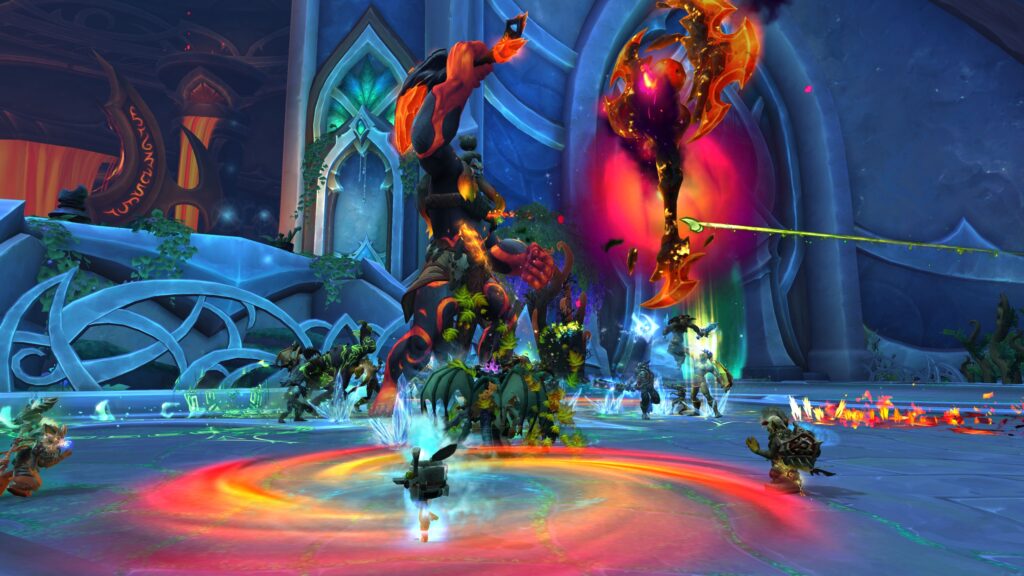
Using event announcement channels for scheduled raids or special events guarantees no one misses a beat. Structured feedback request channels are essential for continuous improvement, allowing team members to share insights after each run. For class-specific discussions, create dedicated spaces where players can explore deep into optimizing their roles and responsibilities.
Recruitment becomes seamless with player recruitment channels, showcasing open spots and attracting the right talent. Effective loot distribution channels help in minimizing disputes by clearly outlining loot rules and tracking awarded items. Performance evaluation channels are the backbone of growth, offering a space for discussing DPS meters, healing charts, and other metrics.
Here’s an example table to help you organize:
| Channel Type | Purpose | Example Usage |
|---|---|---|
| Raid Strategy Channels | Plan strategies and tactics | Boss fight discussions |
| Event Announcement Channels | Inform about upcoming events | Raid schedules |
| Feedback Request Channels | Collect feedback post-raid | Improvement suggestions |
| Player Recruitment Channels | Recruit new team members | Advertising open roles |
Efficient organization of your text channels fosters a better-prepared and cohesive raid team.
Strategy Coordination Tools
Imagine rallying your raid party with the most dynamic and efficient tools at your disposal. Strategy coordination tools are the backbone of any successful WoW raid. By leveraging cutting-edge coordination software, you can guarantee each raid member knows their role and executes it flawlessly.
Coordination software like Discord or TeamSpeak allows for seamless communication. This is essential for real-time updates and immediate responses to sudden boss mechanics. Voice communication guarantees everyone is on the same page, drastically reducing the chances of missteps.
Role assignment is another key aspect. Using these tools to delegate tasks can transform chaos into order. Specify tank duties, healer priorities, and DPS responsibilities clearly. Here’s how to streamline your strategy:
- Create Specific Channels: Designate different communication channels for each role to avoid clutter and confusion.
- Implement Macros: Automated messages can help remind players of their assignments at critical junctures.
- Run Simulation Drills: Practice makes perfect. Use the software to run mock raids, enabling your team to react fast when it counts.
Addon and UI Setup
Efficiently preparing for World of Warcraft raids requires more than just honing your character’s skills; it’s vital to optimize your Addon and UI setup. Selecting the right add-ons is significant. Addon recommendations like Deadly Boss Mods (DBM) and Weakauras offer gameplay enhancements and alert you to critical mechanics. These tools make certain you’re always one step ahead.
Next, focus on UI customization. An interface that fits your needs will bolster your performance. Consider interface layouts that allow quick access to vital spells and items, improving interface accessibility. Moving or resizing elements can reduce clutter, fostering visual clarity, important during fast-paced encounters.
Performance optimization is another key consideration. Disable unnecessary add-ons that could lag your game. Streamlining your UI can aid in smoother gameplay, preventing possible hiccups during intensive boss fights.
In crafting your ideal user experience, prioritize what maximizes your efficiency. Experiment with various layouts and find the balance between information and simplicity.
Practice Runs
One essential aspect of preparing for World of Warcraft raids is conducting practice runs. These dummy runs allow your raid group to engage in trial evaluations without the pressure of a live raid environment. You can use rehearsal guides to structure your sessions, ensuring you cover key components like skill assessments and timing exercises.
Here are three valuable steps to include in your practice runs:
- Teamwork Drills: Focus on coordination and communication within your group. Effective teamwork minimizes chaos during actual raids.
- Performance Metrics: Track individual and group performance to identify areas for improvement. Use add-ons to collect data on DPS, healing, and damage taken.
- Feedback Loops: After each practice, hold a brief meeting to discuss what went well and what needs more work. Constructive feedback can boost team morale and efficiency.
Detailed storytelling enhances the experience: imagine pulling the boss, mastering newfound strategies, and seeing your team’s synergy improve with each run. By incorporating these elements, you transform ordinary practice into a powerful tool for raid success. Timing exercises help your team react swiftly and coordinate cooldowns impeccably, setting the stage for an impressive performance in the actual raid.
Post-Raid Review
After the raid is over, take a moment to breathe and then dive straight into a thorough post-raid review. This essential step is where you’ll dissect every element of the raid, glean insights, and create actionable plans for future success. An effective post-raid analysis includes both positive highlights and areas for improvement.
Start with performance feedback: what went well and what can be refined. Engage your team in constructive dialogue, focusing on specifics—whether it’s dodging AoEs more effectively or optimizing DPS rotations.
Below is a table to guide your review process:
| Aspect | What Went Well | Areas for Improvement |
|---|---|---|
| Communication | Clear tank-healer coordination | Improve callouts during chaos |
| Mechanics | Executed boss mechanics perfectly | Timely handling of adds |
| Resource Use | Efficient mana management | Better health potion timing |
| Team Synergy | Excellent group positioning | Optimize buff usage |
Frequently Asked Questions
How Important Is Guild Support for Raid Success?
Guild support is essential for raid success. You rely on strong guild dynamics, efficient support systems, and effective communication strategies. When everyone’s on the same page, you enhance team cohesion, ensuring smoother raids. Imagine overcoming that challenging boss because your team’s coordination is impeccable. Strong bonds and mutual support aren’t just beneficial—they’re necessary for achieving victory and enjoying the game’s tougher challenges together. Without them, raiding becomes chaotic and frustrating.
What Is the Best Way to Handle Raid-Related Conflicts?
Ever wondered how to best tackle raid-related conflicts? Start with solid communication strategies. Clear, honest discussions can resolve most issues before they escalate. Use active listening to understand everyone’s perspectives. Establish conflict resolution guidelines within your guild, ensuring everyone knows the protocol. It’s crucial to foster an environment where members feel valued and heard. This approach transforms conflict into a tool for growth and teamwork.
How Much Time Should Be Dedicated to Raid Preparation?
It’s important to allocate enough time for raid preparation to guarantee success and efficiency. Start with gear selection strategies; you need to match your gear effectively for the raid’s specific challenges. Additionally, establish pre-raid rituals like reviewing boss mechanics, organizing your inventory, and communicating roles with your team. These steps might take a couple of hours initially, but honing them can reduce prep time to about an hour before each raid.
Do Real-Life Schedules Affect Raid Team Performance?
Your real-life commitments can turn a raid team’s best plans into chaos faster than a rogue dragon swooping in! Effective time management is the ultimate boss here. You can’t simply pause your life for a raid; every group member’s schedule holds the collective success. Planning around work, school, and family is like a high-stakes juggling act, where one dropped ball can wipe the whole raid. So, keep those calendars synced and communication clear!
How Can New Players Get Involved in Raiding?
New players can achieve raid entry by understanding class roles and gear optimization. Start with beginner tips like joining a friendly guild and using online resources. Engage with your class’s community to learn your role in raids. Focus on gear optimization by farming dungeons and ensuring you’re well-equipped. Don’t hesitate to ask experienced players for advice; they’re often enthusiastic to help newbies succeed in their first raids.
Conclusion
When you thoroughly prepare for a World of Warcraft raid, you’re not just setting yourself up for success; you’re practically summoning legendary victories. From assembling the dream team to analyzing every boss’s sneeze, fine-tuning gear, and chugging potions like a pro, the effort makes all the difference. Your meticulous preparation transforms not just the raid, but the entire domain. Take these steps, and you’ll leave both allies and enemies in absolute awe.
Game on, champion!
Read more about raids in my Blog